

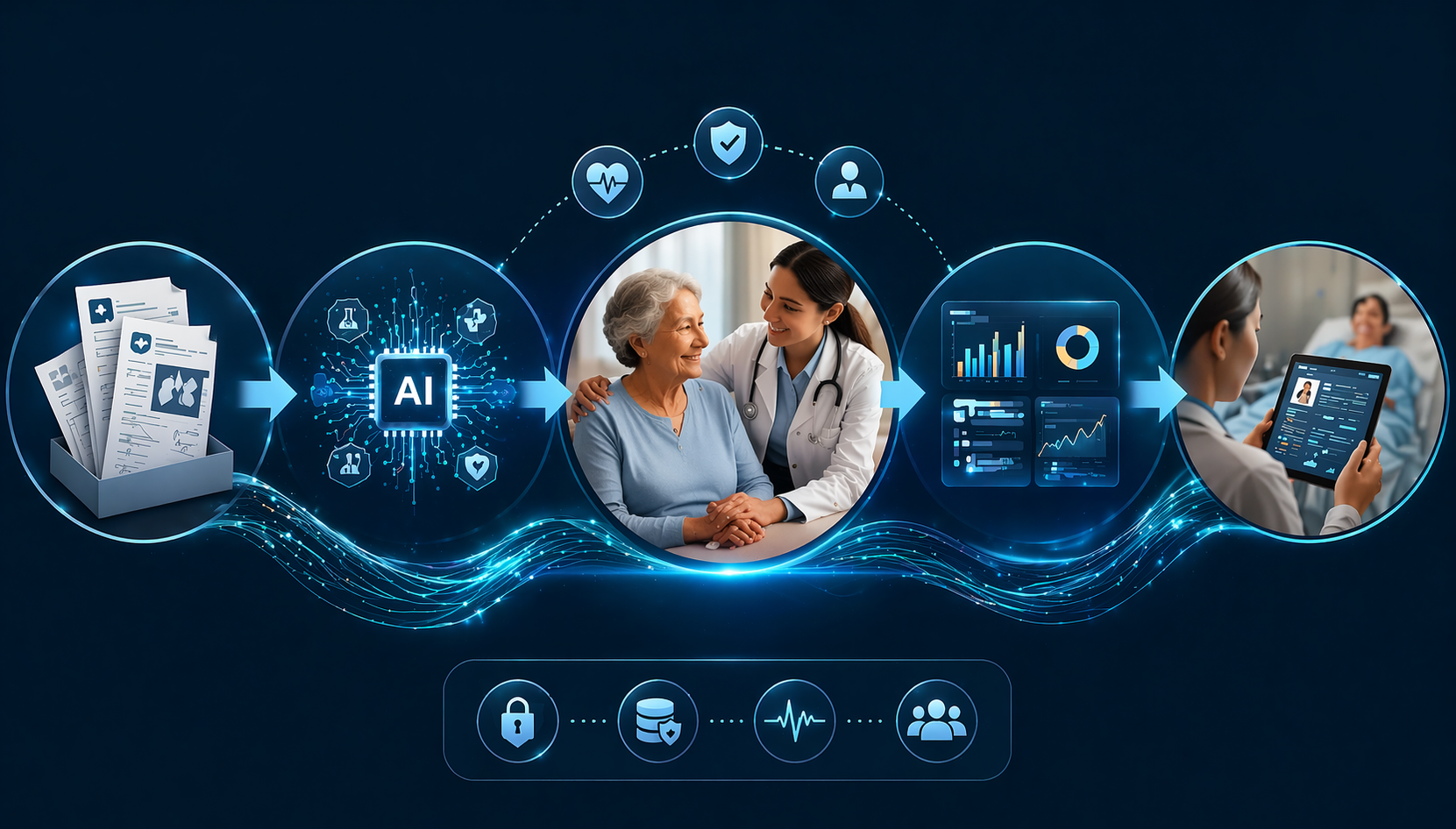
Every minute your team spends on manual paperwork is a minute taken away from patient care. In the modern medical landscape, healthcare providers, clinic managers, and hospital administrators are facing a critical breaking point. Despite the rapid advancement of medical science and treatment protocols, the administrative backbone of healthcare has largely lagged. If your healthcare organization feels overwhelmed by administrative bottlenecks, you are not alone.
Today’s medical facilities are juggling too many disconnected systems, relying heavily on error-prone manual steps, and carrying far too much operational risk. The unavoidable result? Slower daily operations, steadily rising overhead costs, and deeply frustrated healthcare staff who are experiencing record-high levels of burnout.
But it absolutely doesn’t have to be this way. The future of medical administration relies on AI-powered healthcare automation—a transformative approach that allows you to stop managing tedious processes and start focusing on delivering superior patient outcomes.
The Hidden Cost of Manual Healthcare Administration
Before exploring the solution, it is vital to understand the sheer scale of the problem. Administrative complexities are quietly draining resources from healthcare organizations of all sizes.
- Rampant Staff Burnout: Doctors and nurses did not go to medical school to perform data entry. When highly trained medical professionals are forced to spend hours navigating clunky Electronic Health Records (EHR) systems or filling out redundant forms, morale plummets.
- The Revenue Cycle Squeeze: Manual medical billing processes are inherently flawed. Human error leads to incorrect coding, which inevitably leads to high claim denial rates. This delays cash flow and requires even more administrative time to appeal and correct.
- Deteriorating Patient Experiences: When front-desk staff are buried in paperwork, patient intake becomes slow and impersonal. Long wait times and administrative mix-ups lead to lower patient satisfaction scores and weakened trust.
What is AI-Powered Healthcare Automation?
AI-powered healthcare automation is the strategic integration of artificial intelligence and machine learning technologies into your medical facility's daily workflows. Unlike traditional software that simply digitizes a manual task, AI systems can read, learn, route, and execute complex administrative workflows intelligently.
By implementing medical process automation, you can eliminate structural inefficiencies, drastically reduce the administrative burden on your clinical staff, and give your team the time they desperately need to focus on what truly matters—your patients.
4 Ways AI Transforms Healthcare Operations
Imagine a streamlined, intelligent practice management system that works flawlessly in the background. Here is exactly what an AI-driven healthcare system can do for your organization:
1. Automatically Processes Patient Data in Seconds
In a traditional setting, patient data processing requires manual extraction from intake forms, faxes, and emails, followed by manual entry into an EHR. AI healthcare tools utilize Optical Character Recognition (OCR) and Natural Language Processing (NLP) to instantly read, categorize, and securely input complex patient data in a matter of seconds. This ensures that doctors and nurses have accurate, up-to-date medical histories the moment they step into the examination room, eliminating dangerous data silos.
2. Eliminates Repetitive Administrative Tasks
From patient scheduling and appointment reminders to processing prior authorizations, repetitive tasks eat up thousands of hours per year. Intelligent automation handles these routine workflows without human intervention. AI-driven chatbots can handle 24/7 patient scheduling, while automated workflows can instantly verify insurance eligibility before the patient even walks through the door. This transforms your front-desk staff from overwhelmed data-entry clerks into proactive patient-care coordinators.
3. Reduces Billing Errors and Claim Denials
Revenue Cycle Management (RCM) is one of the biggest pain points in healthcare administration. AI medical billing software automatically cross-references medical codes with insurance rules before a claim is ever submitted. By catching discrepancies, missing modifiers, or coding errors early, AI significantly reduces costly claim denials. The result is a highly optimized revenue cycle, faster reimbursements, and a healthier bottom line for your practice.
4. Keeps You Compliant Without Manual Effort
Healthcare regulations—from HIPAA in the US to various global patient privacy laws—are incredibly strict, and the penalties for non-compliance are severe. Maintaining compliance traditionally requires exhaustive manual audits. AI automation provides continuous, real-time monitoring of your data security and operational workflows. It automatically flags unauthorized access attempts, ensures all data transfers are encrypted, and generates instant audit trails, keeping your organization compliant effortlessly and reducing your legal risk.
The ROI of Better Patient Care
Investing in AI healthcare software isn't just an IT upgrade; it is a fundamental shift in how your medical organization operates. When you remove the friction of manual paperwork, the return on investment is immediate and profound.
Your operational costs decrease as efficiency skyrockets. Your team finally gets to do the clinical work they love, leading to improved staff retention. Most importantly, your patients receive the undivided attention, faster diagnosis, and personalized care they deserve.
Stop letting administrative bottlenecks dictate your standard of care. Equip your team with the automated tools they need to thrive in the modern healthcare landscape.